Krishnana Mane - A House of Quiet Restriant
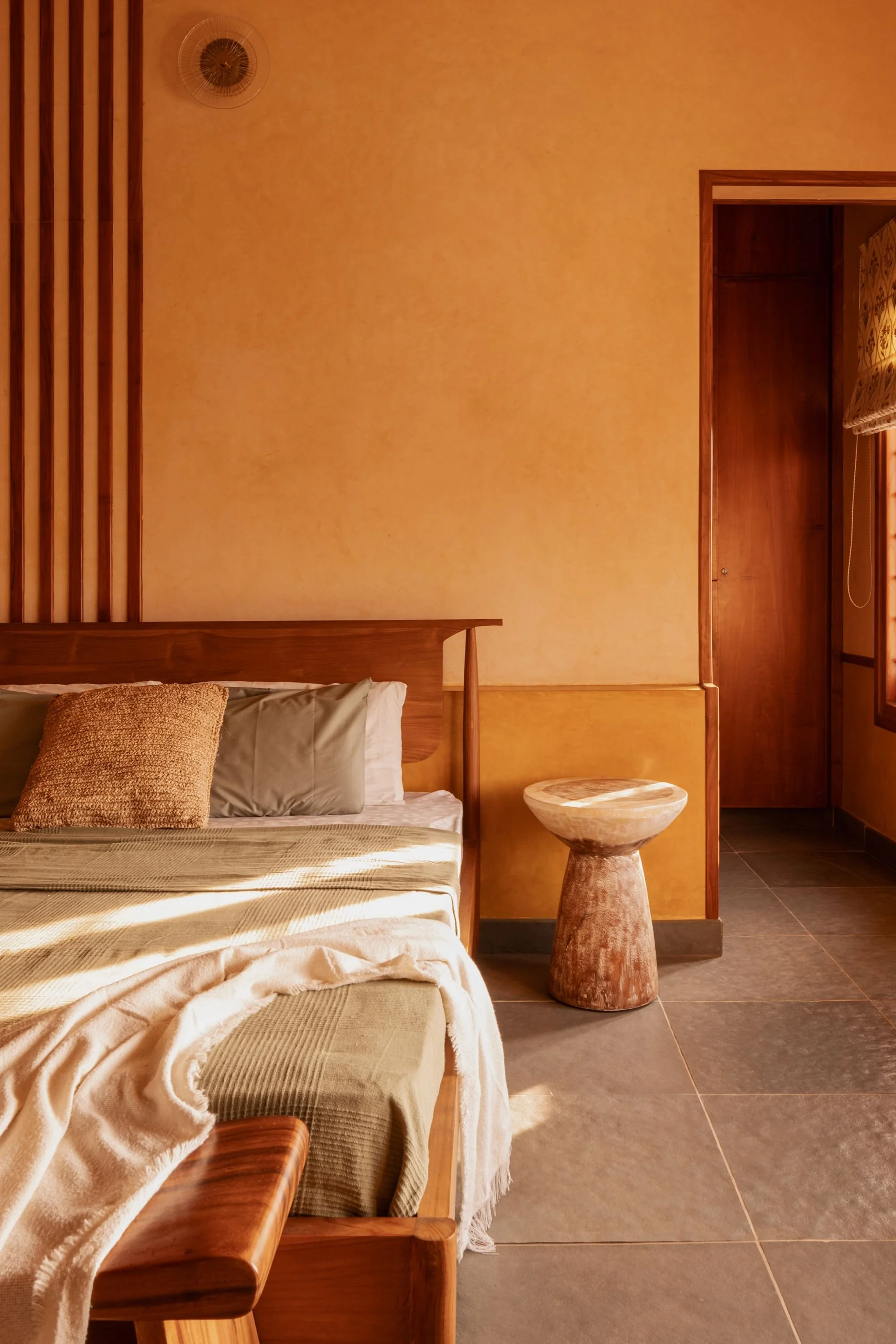
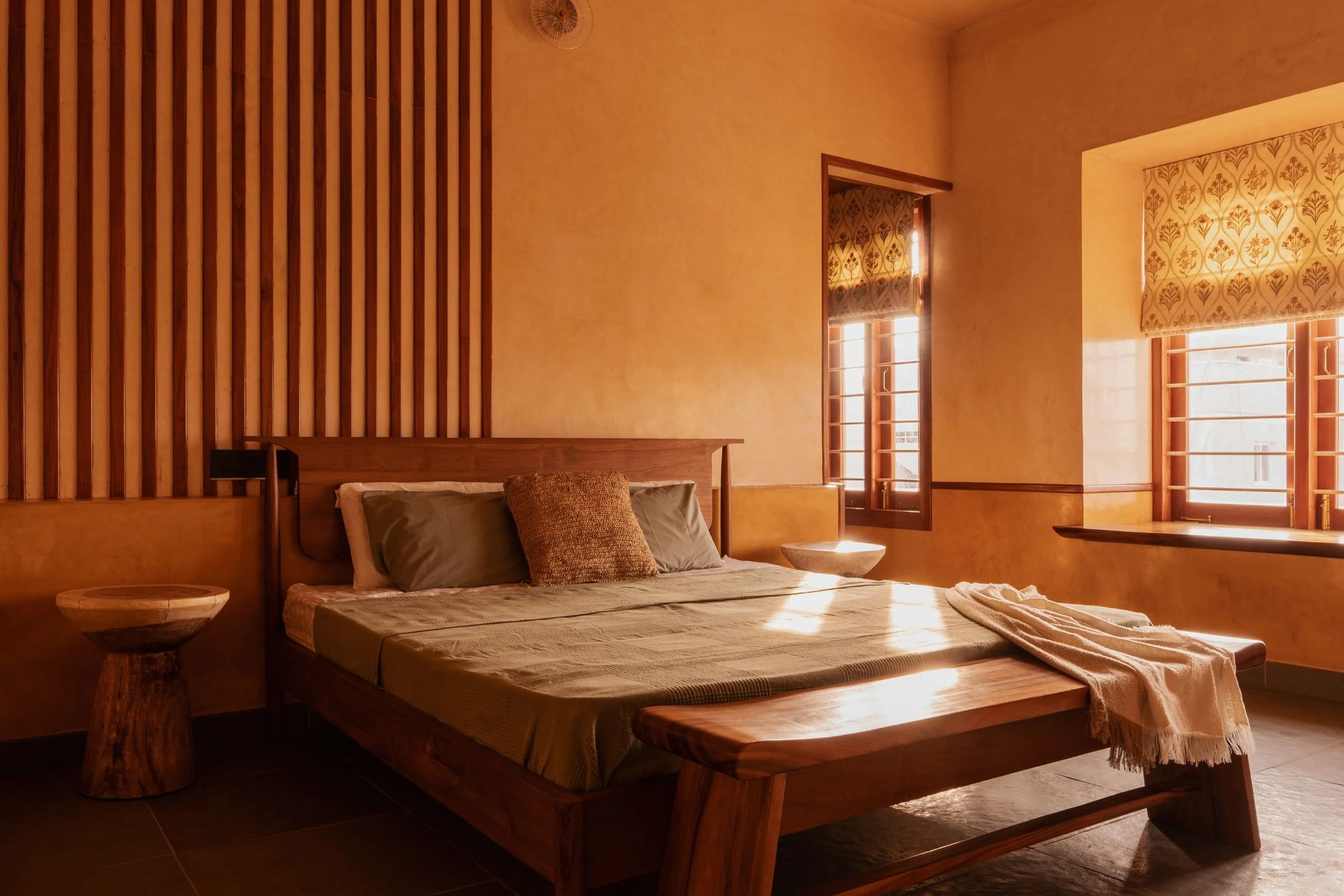
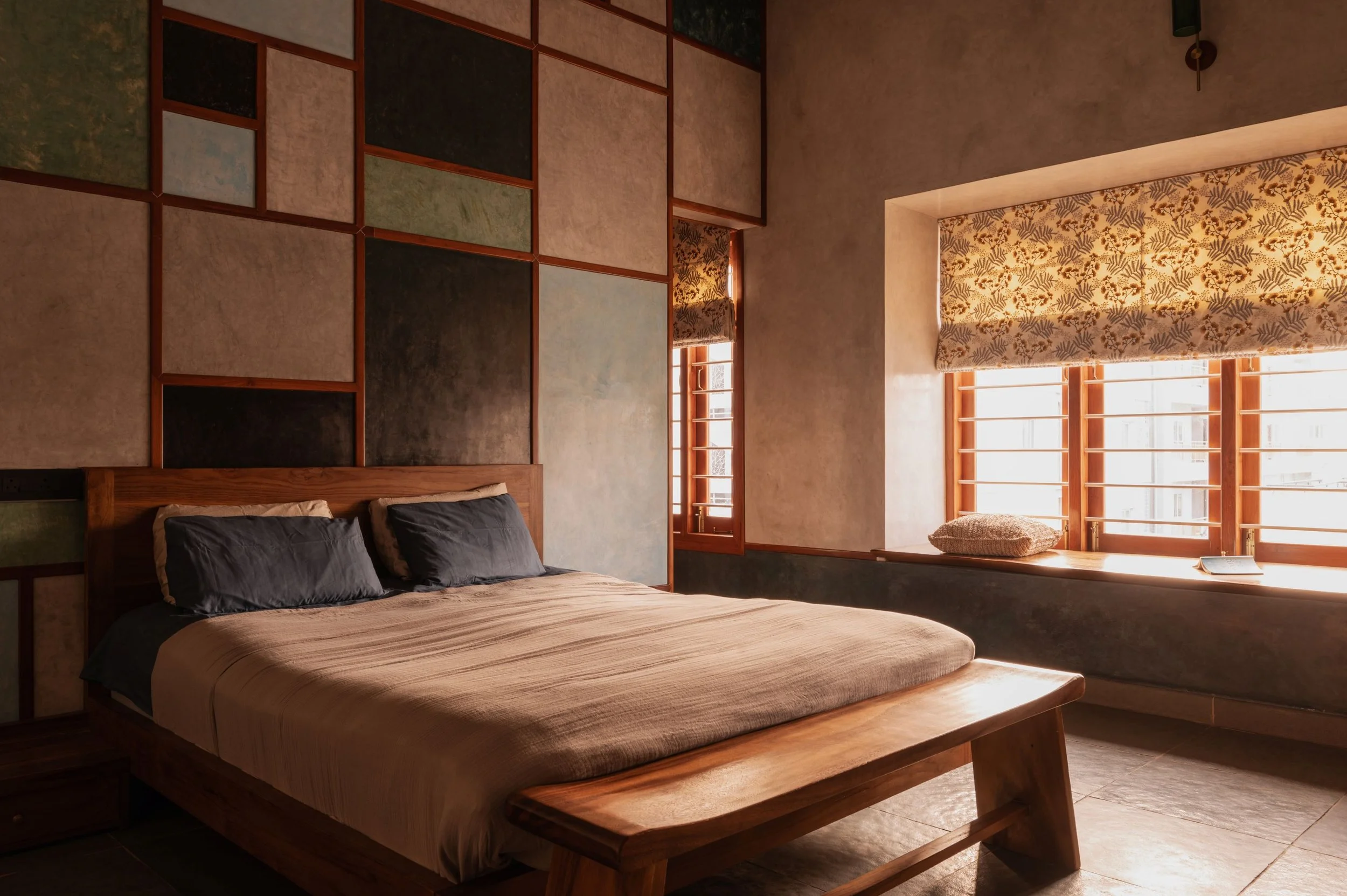
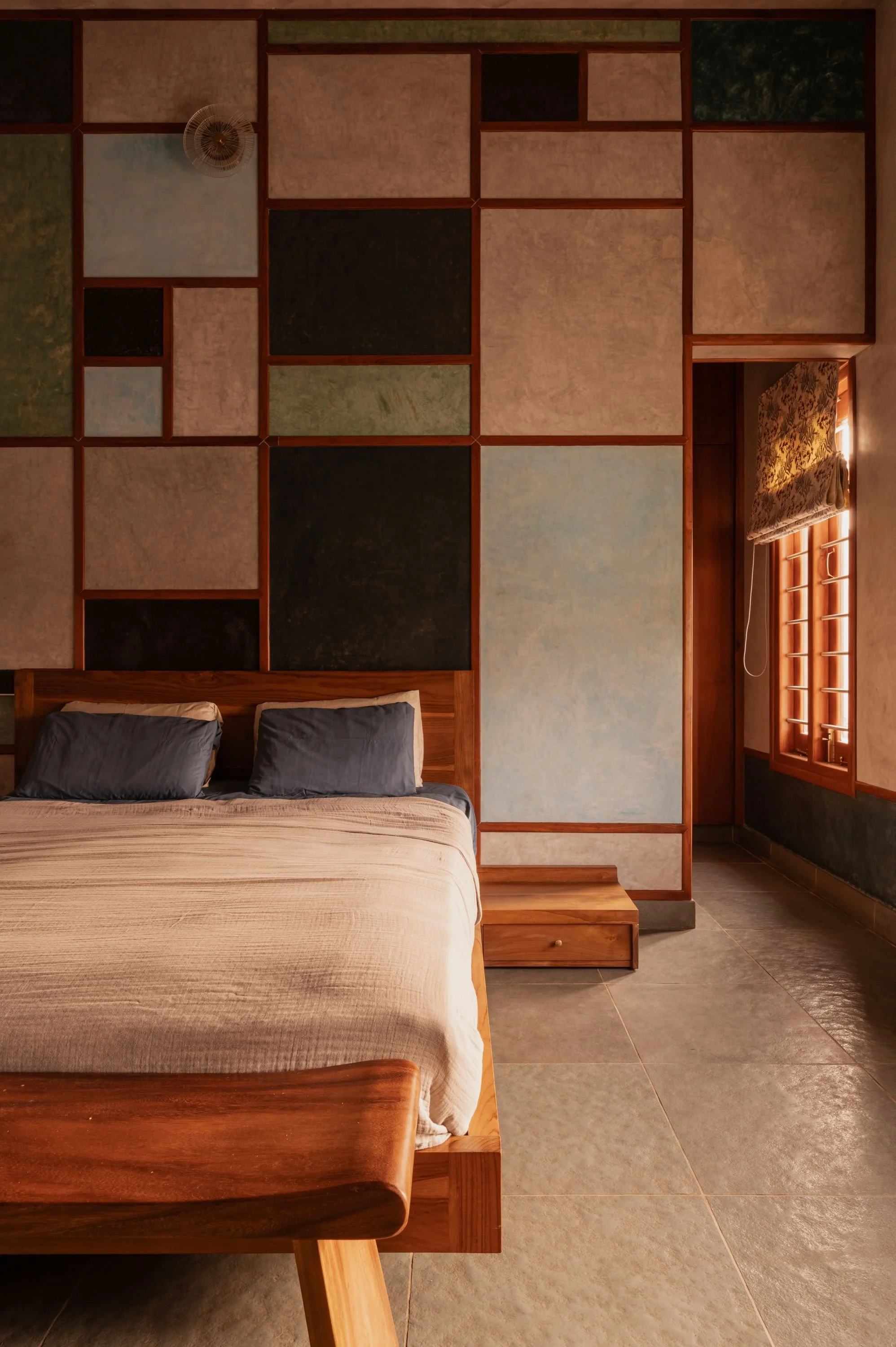
Perched above a mixed-use building in KR Puram, Krishnana Mane unfolds across the third, fourth, and fifth floors as a quiet, inward-looking home within the city. Conceived as an interior project from a bare structural shell, the residence reflects a deliberate move away from visual excess, instead prioritising material honesty, lived-in calm, and the quiet rhythms of everyday life.
The client, a builder by profession and deeply familiar with construction methods and material possibilities, brought a rare clarity to the brief. Despite an intimate knowledge of finishes, systems, and formal expressions, the aspiration was not to display abundance, but to arrive at a home shaped by restraint—one where spaces feel considered, tactile, and deeply personal rather than overtly crafted.
This shared understanding between the family and the designer became the foundation of the project. The home was not to perform as an object, but to support daily rituals with ease and adaptability. Rather than imposing form, the interiors are shaped through quiet decisions—allowing light, texture, and occupation to define the experience over time. Materials are chosen for how they age, surfaces for how they are touched, and spaces for how they are inhabited.
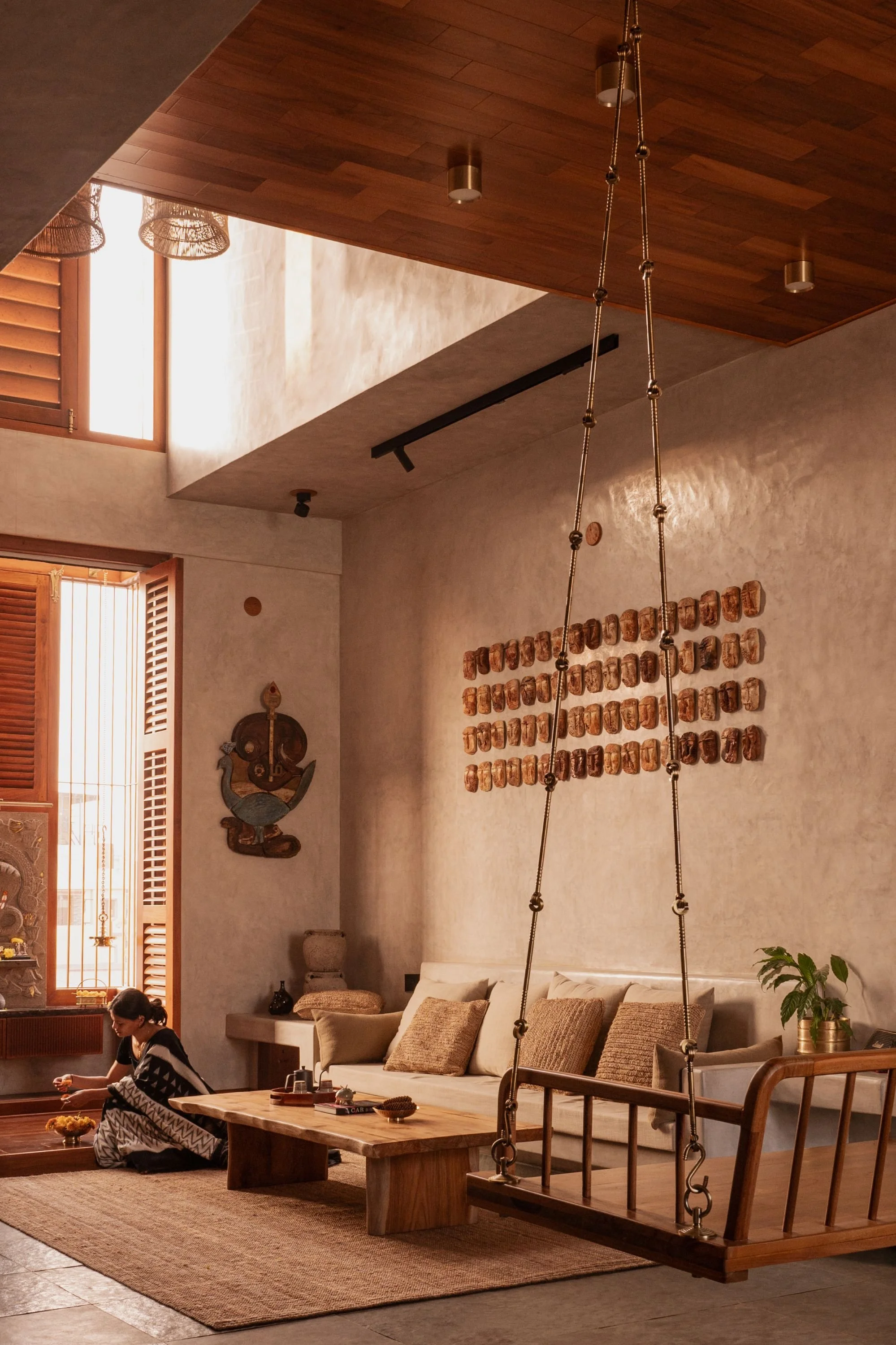
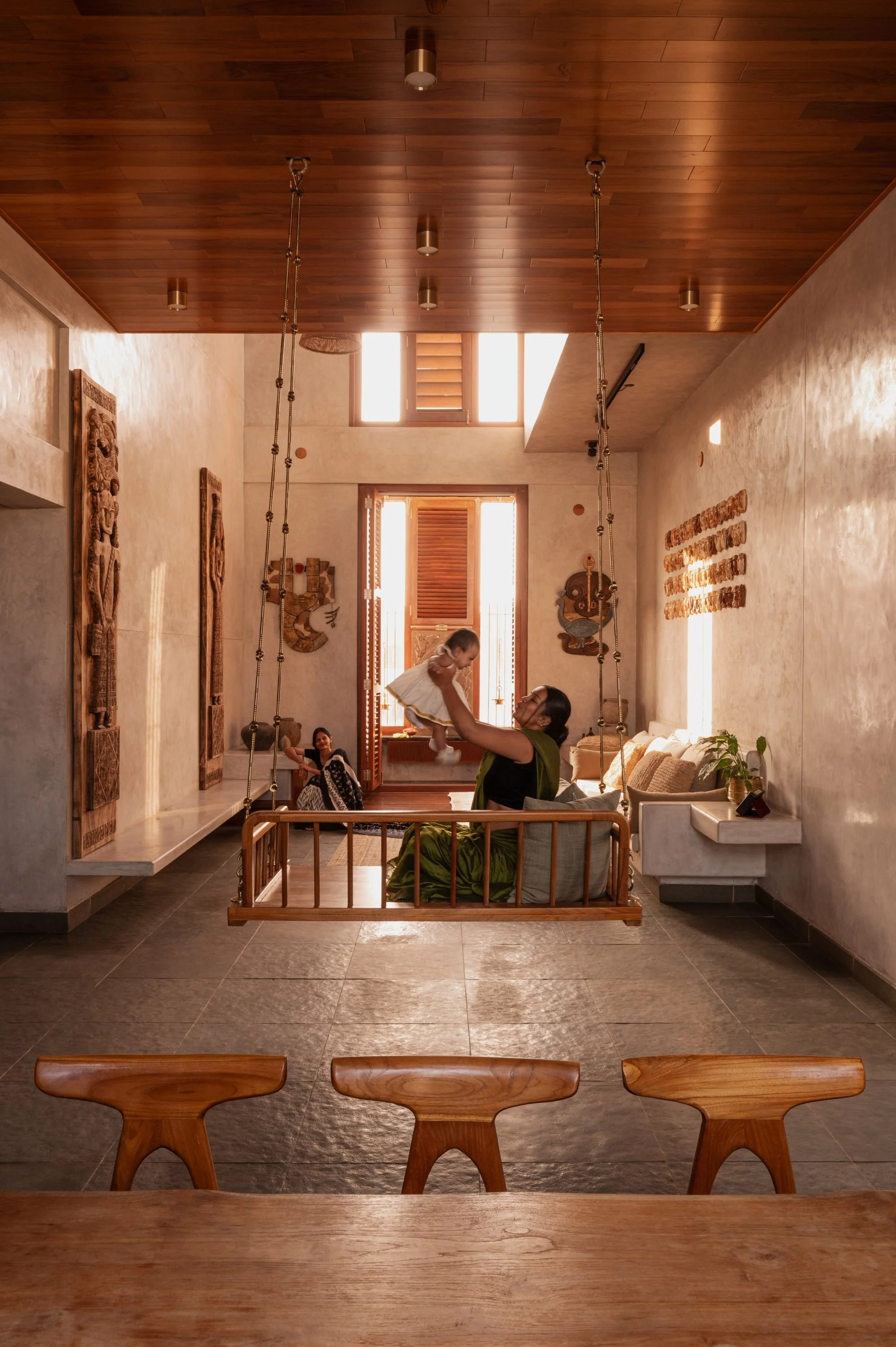
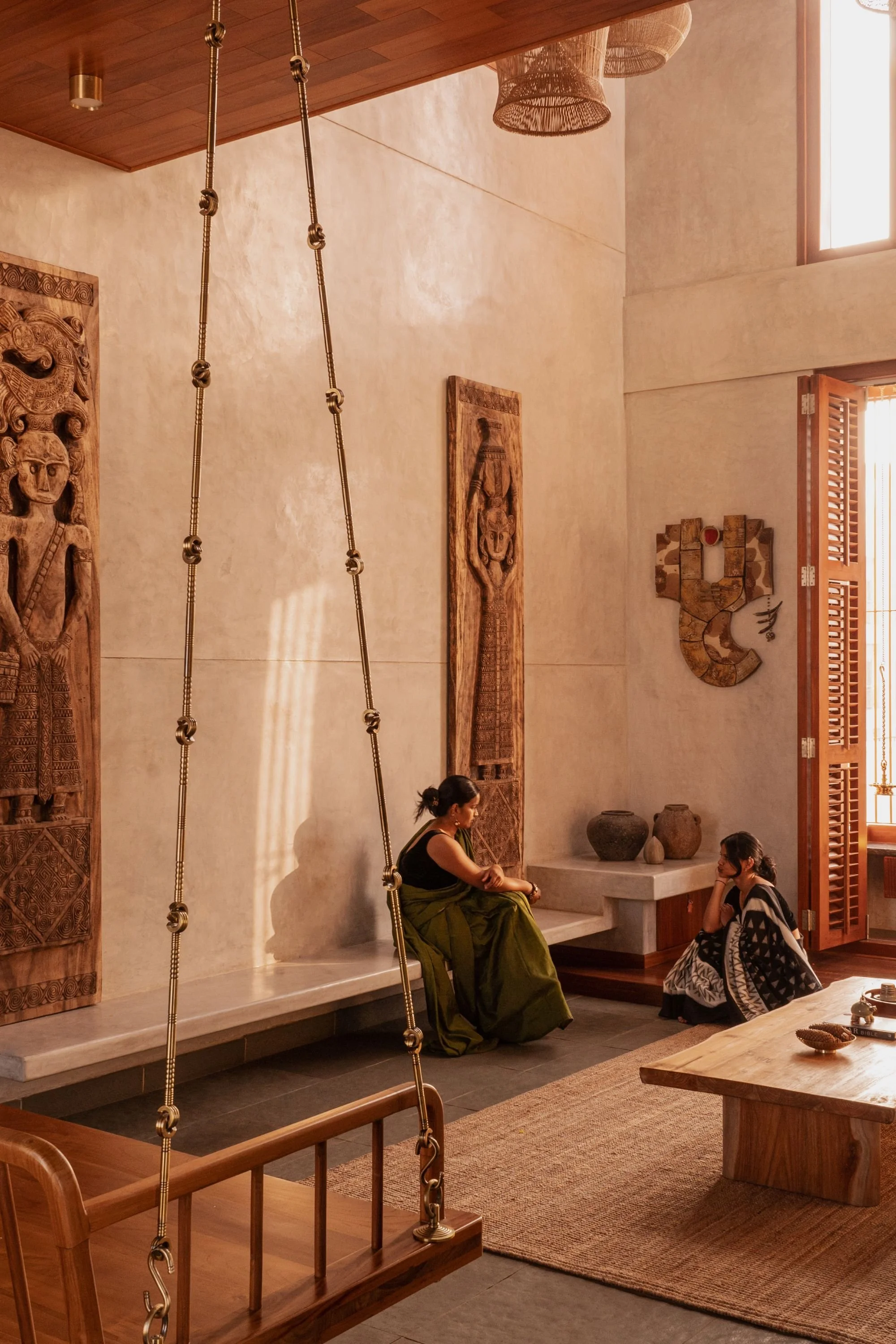
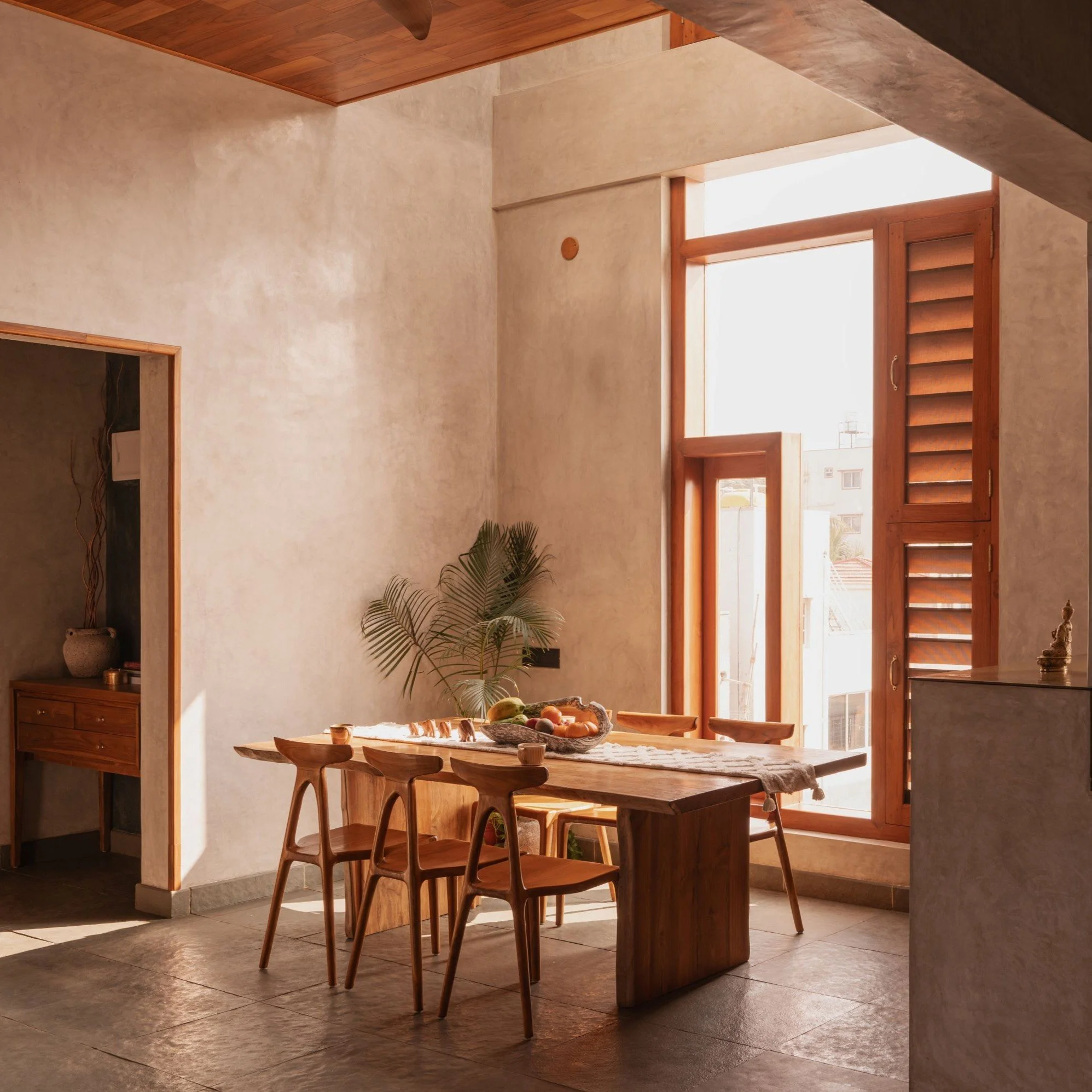
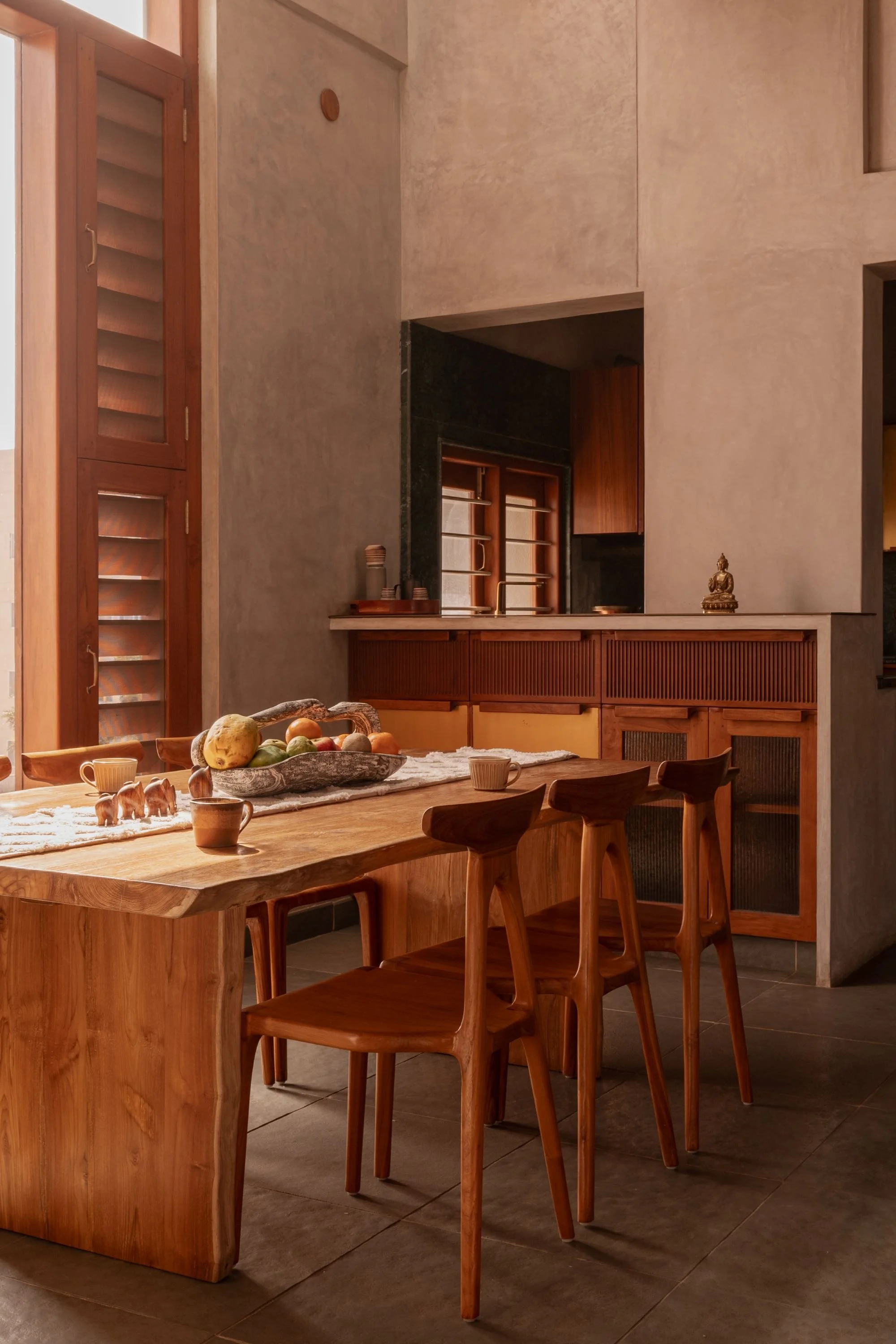
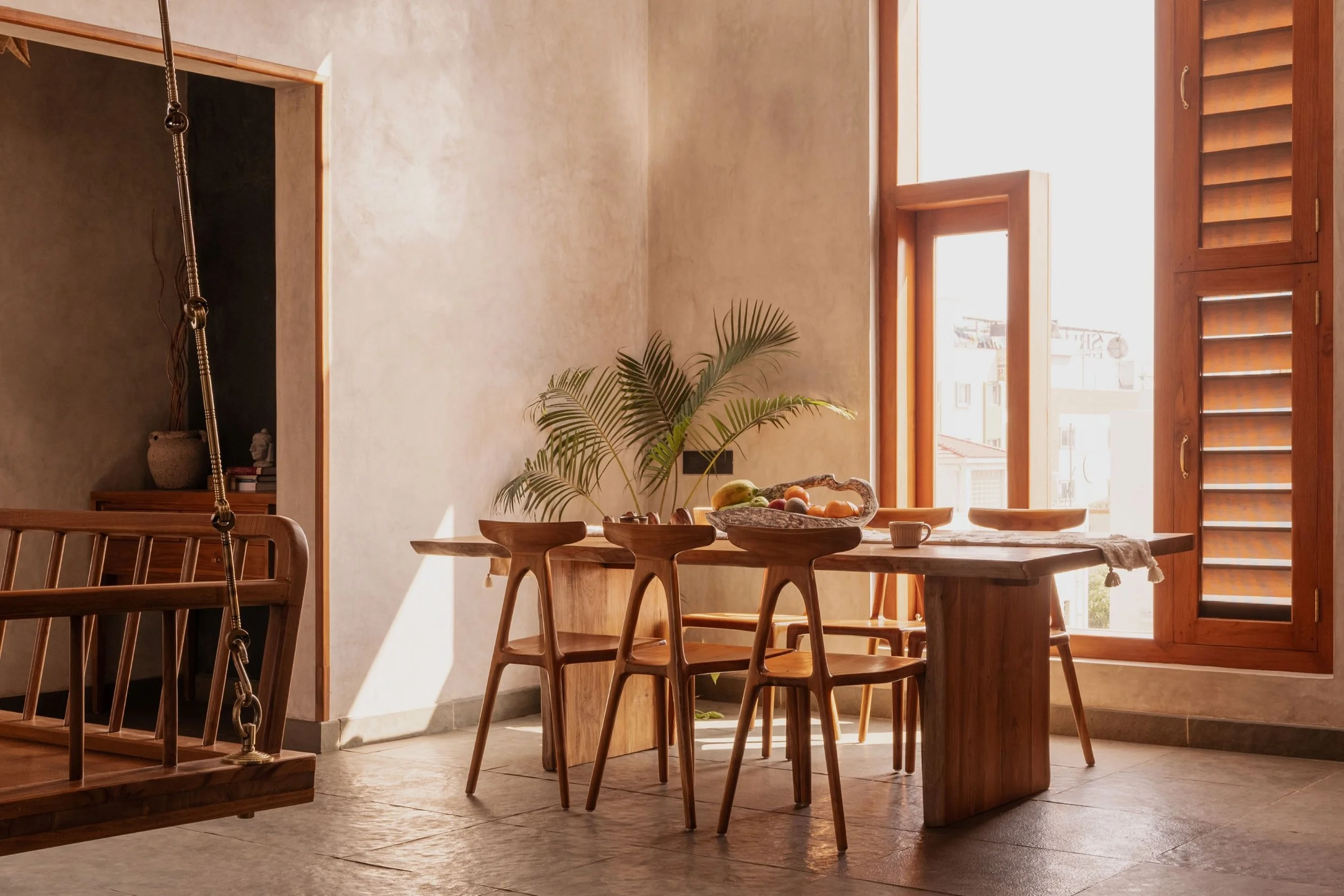
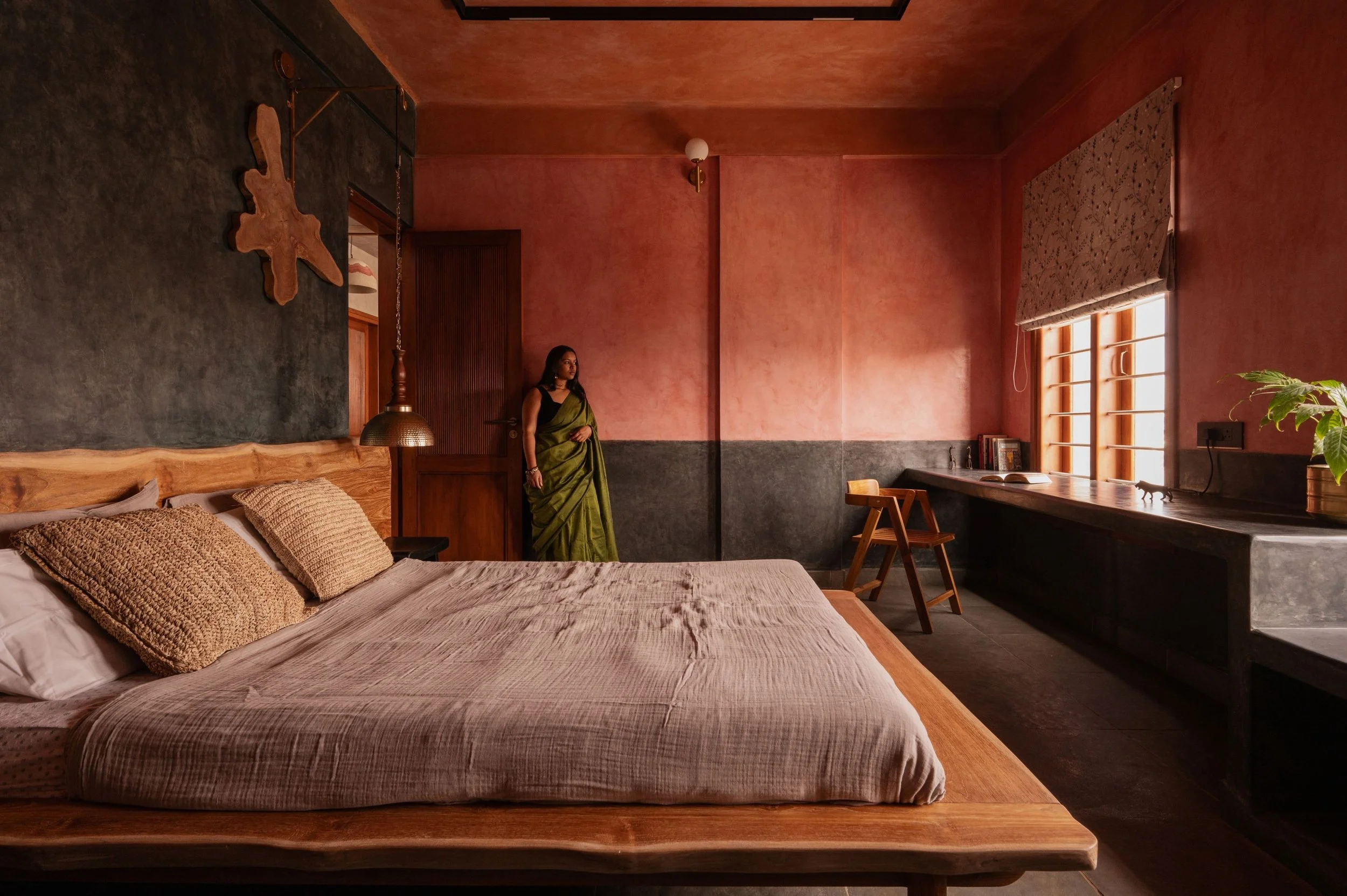
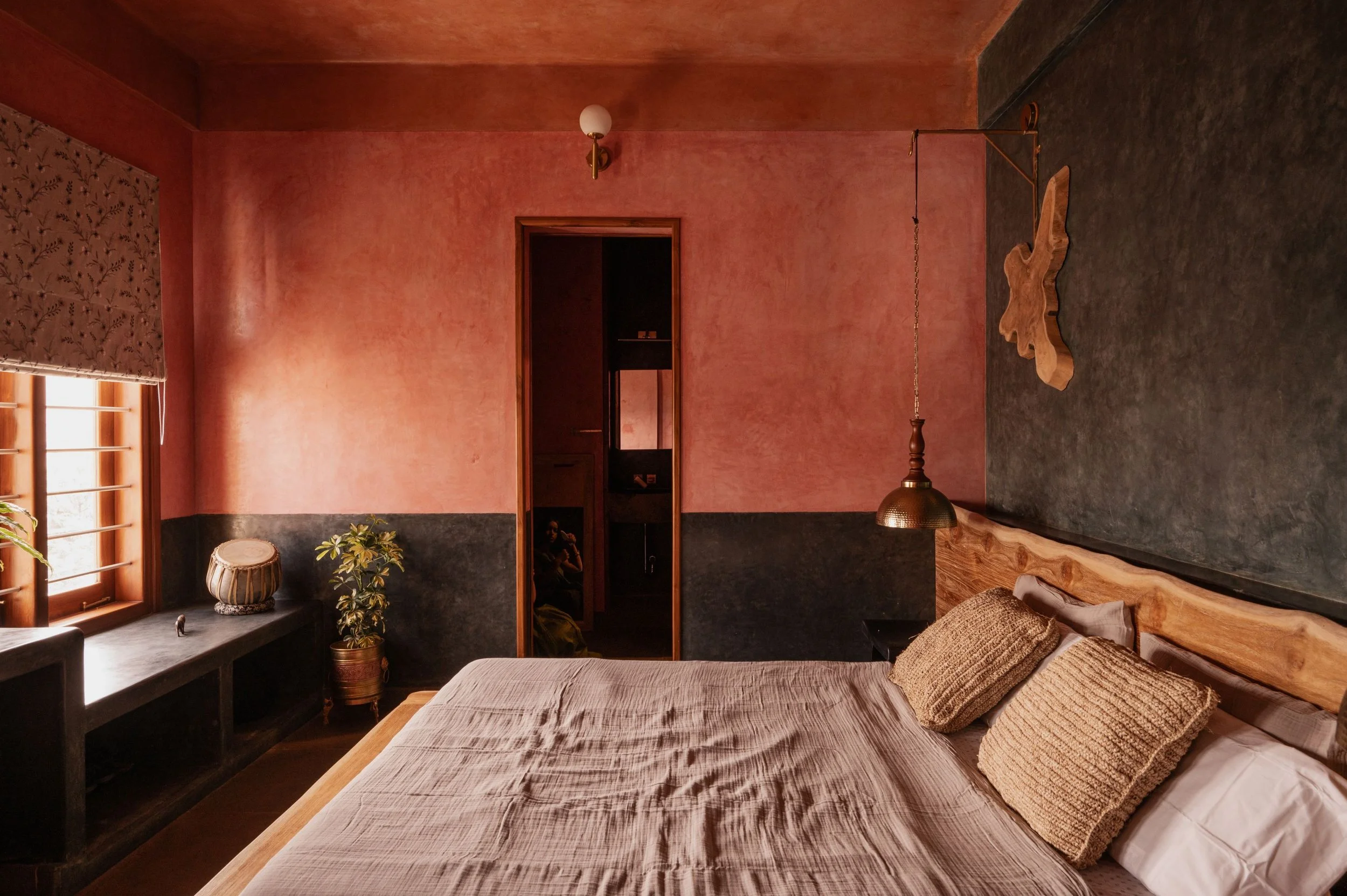
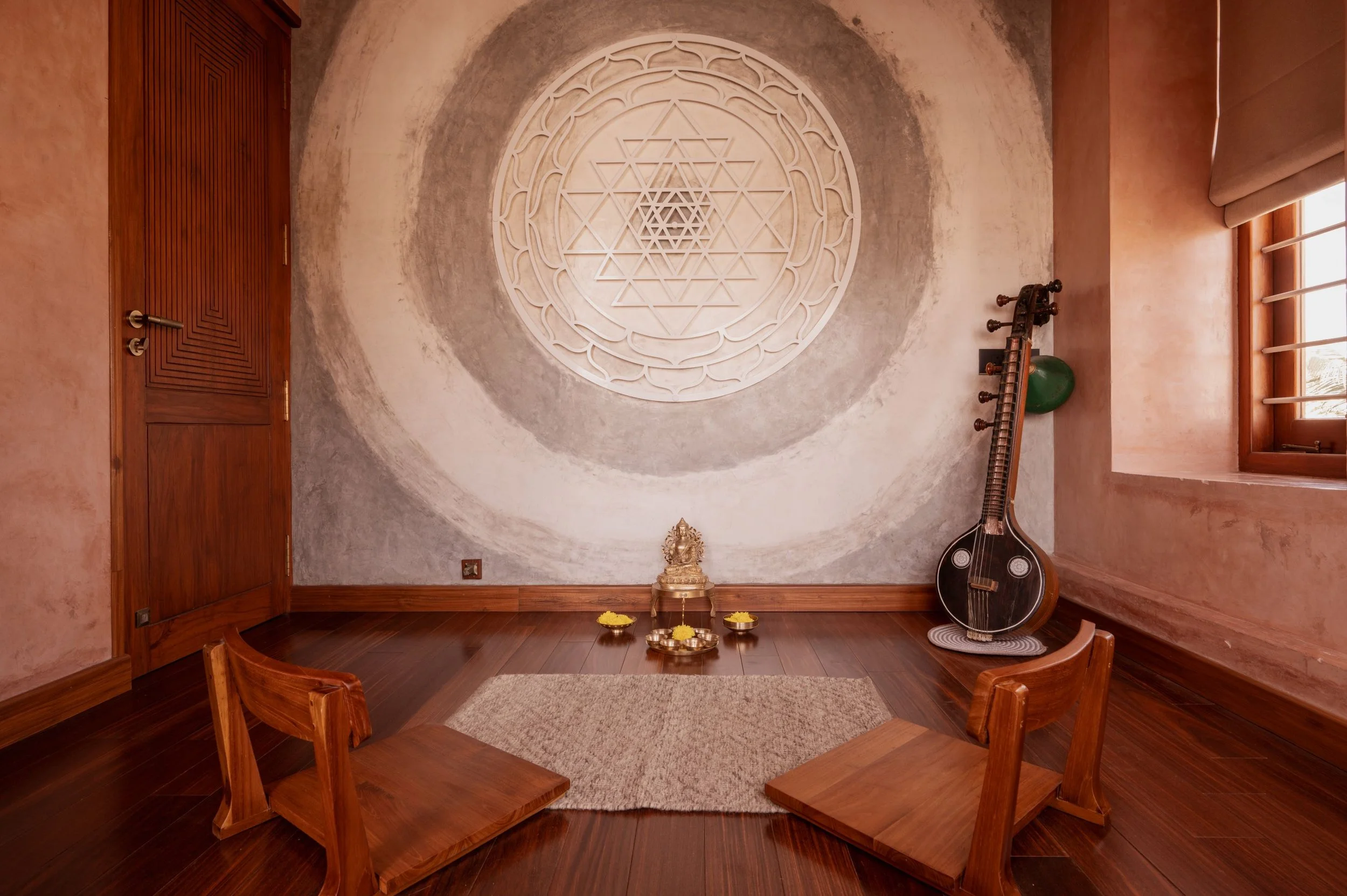
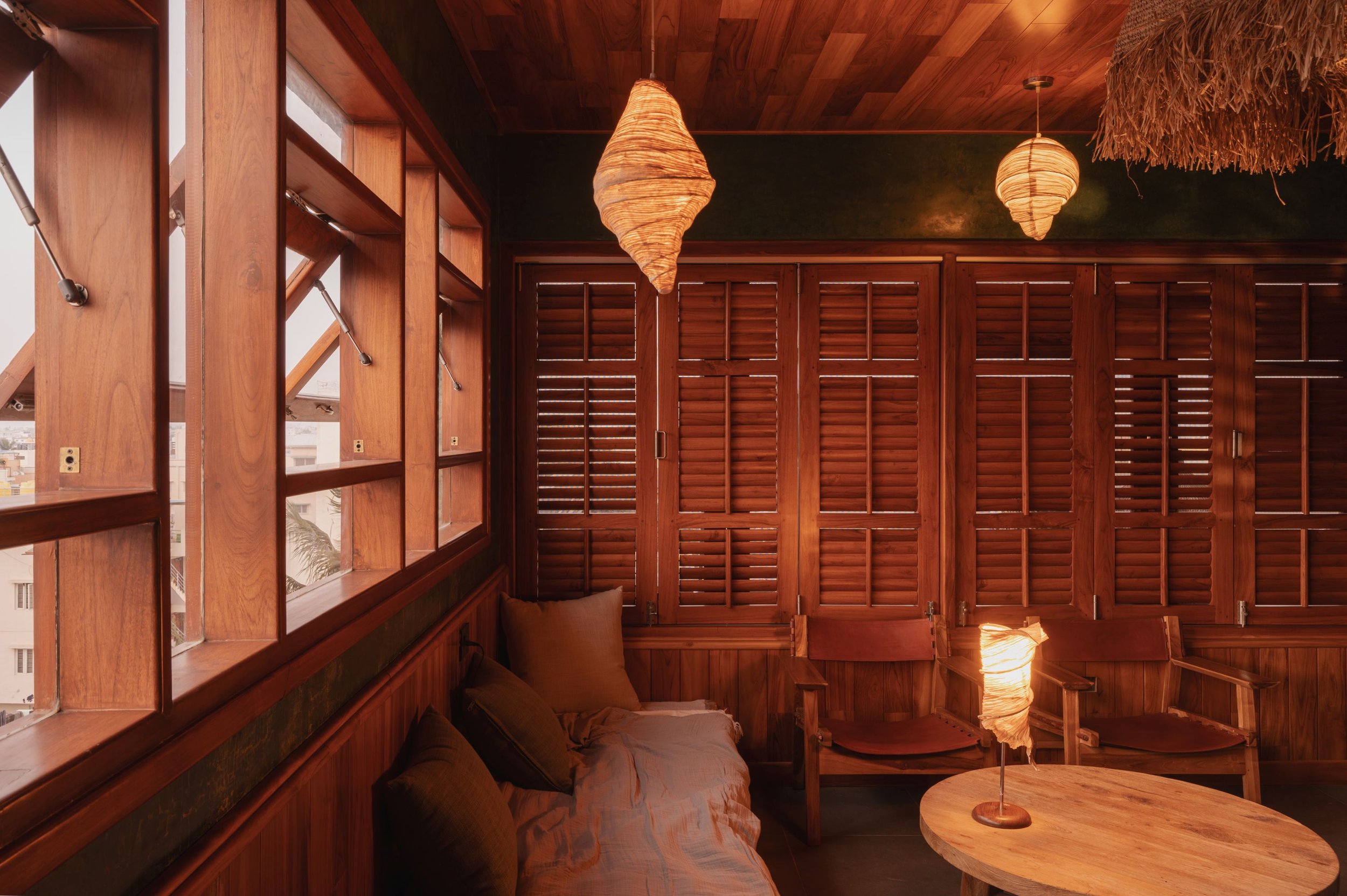
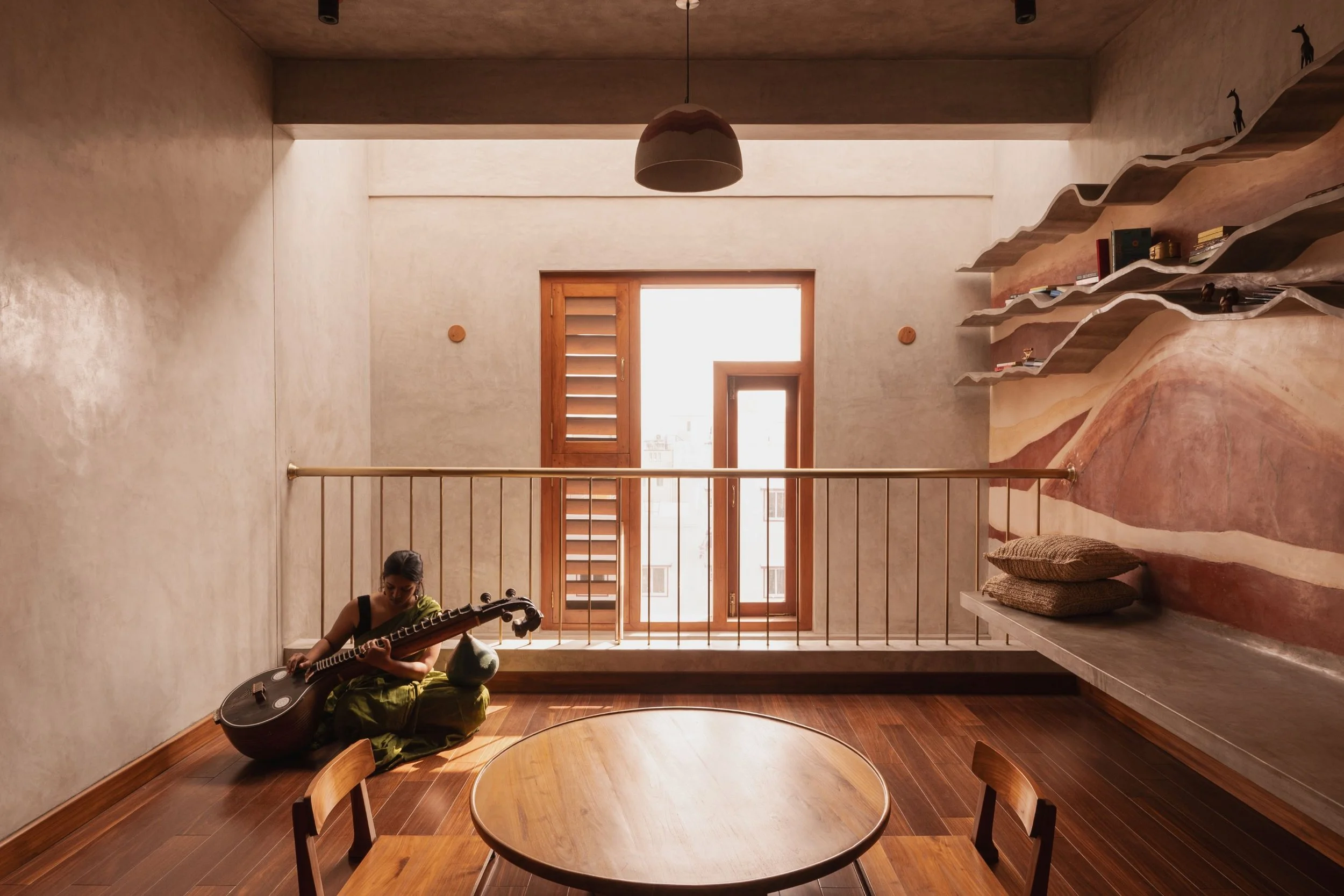
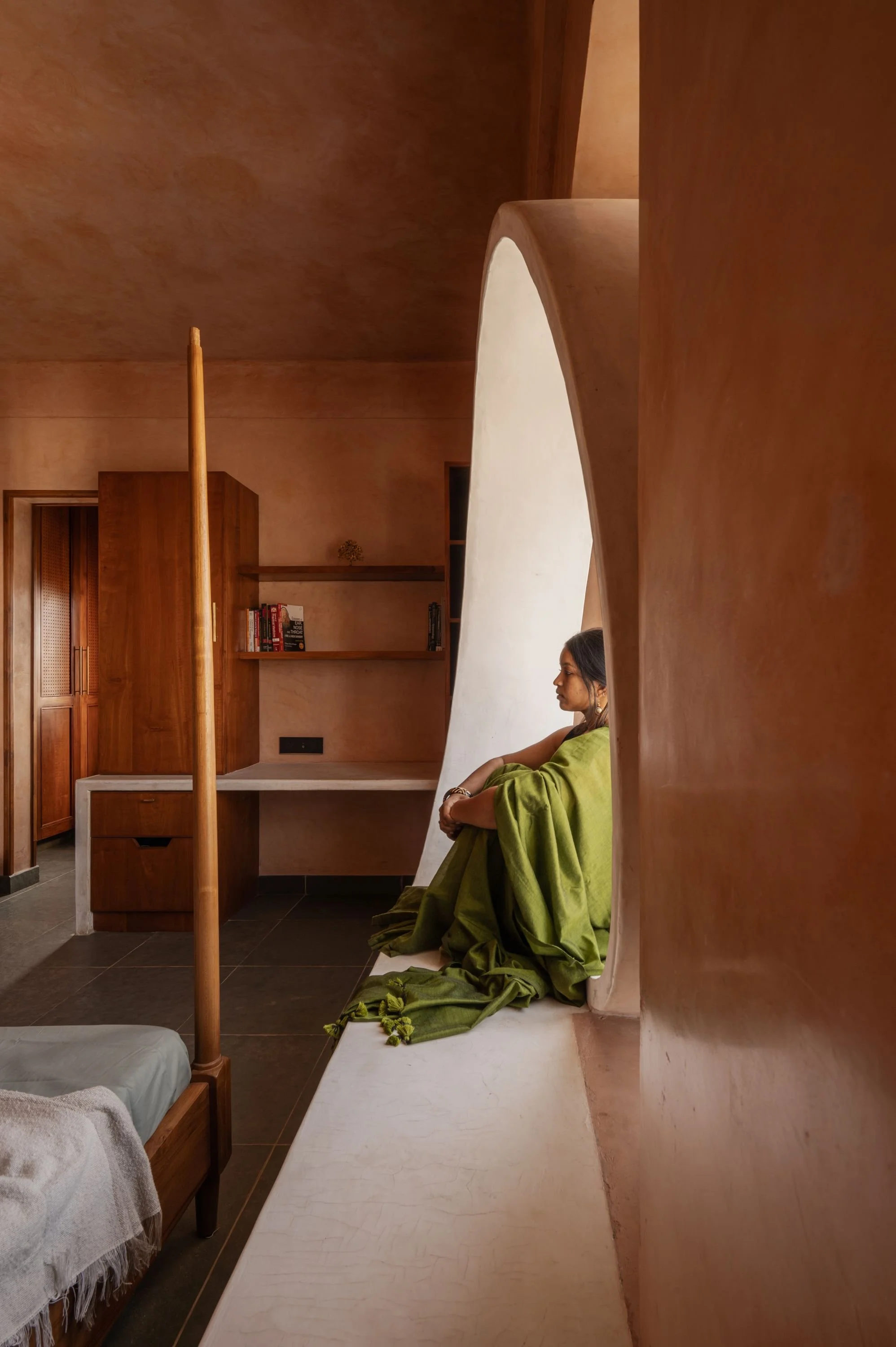
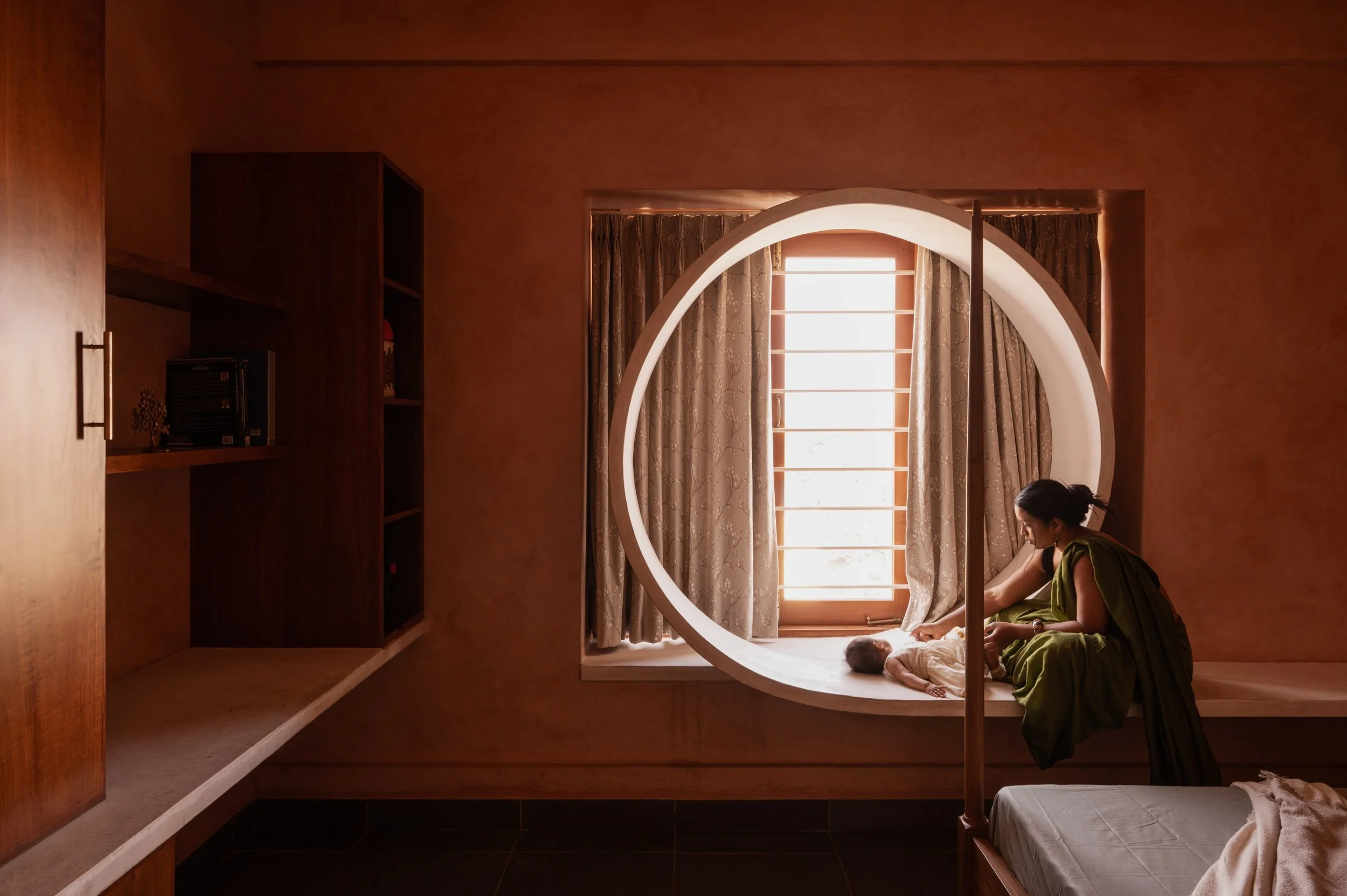
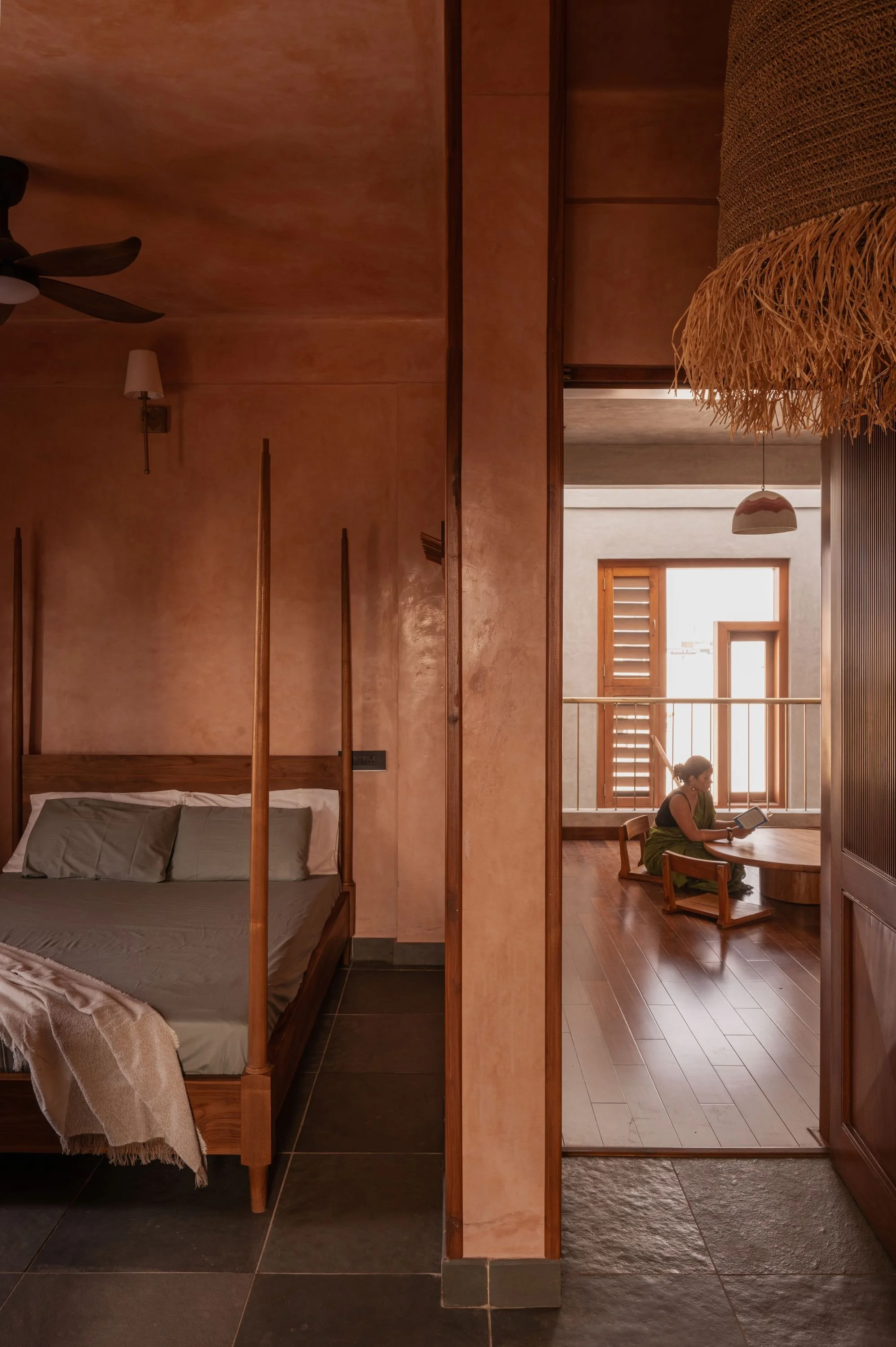
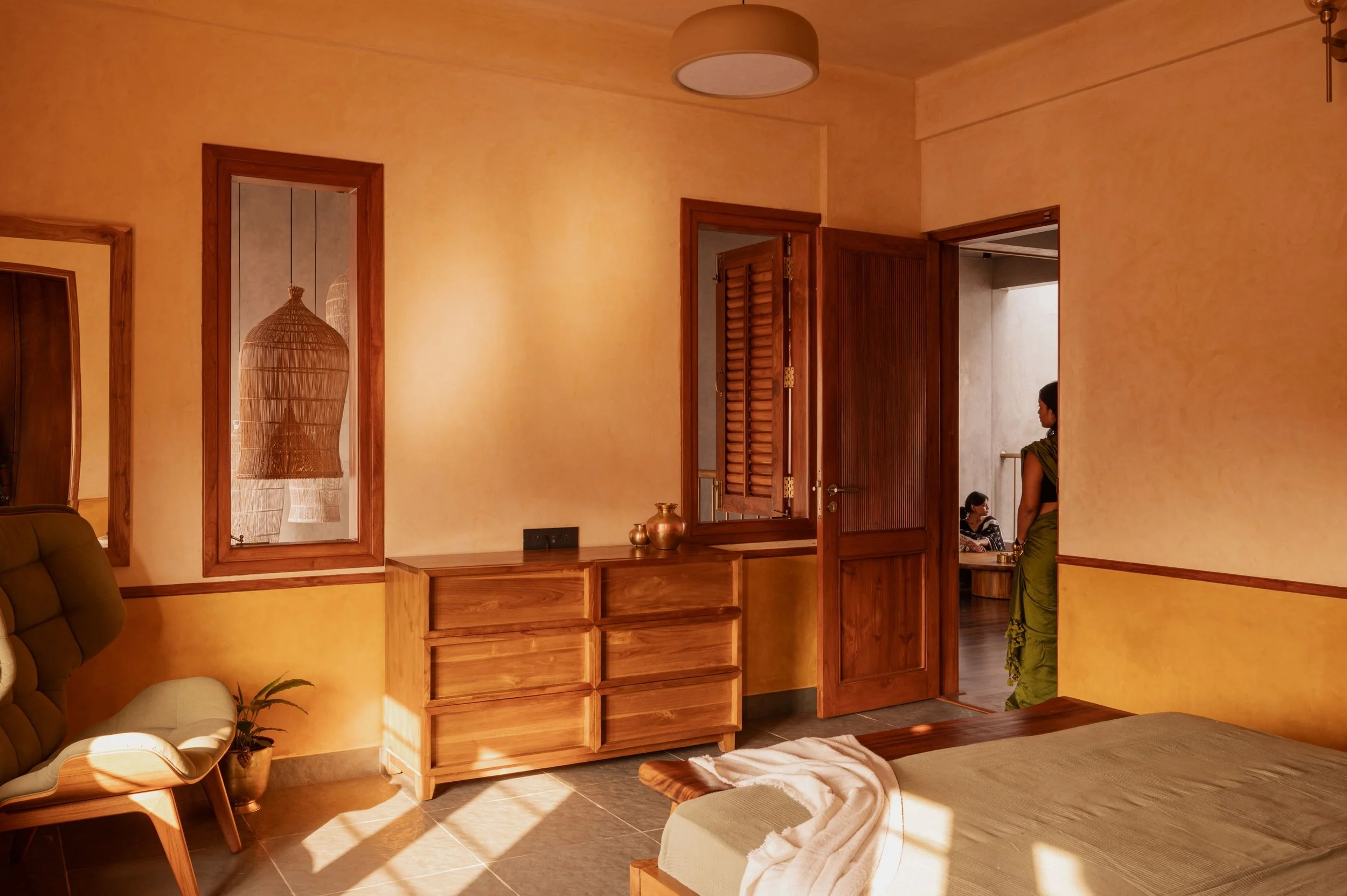
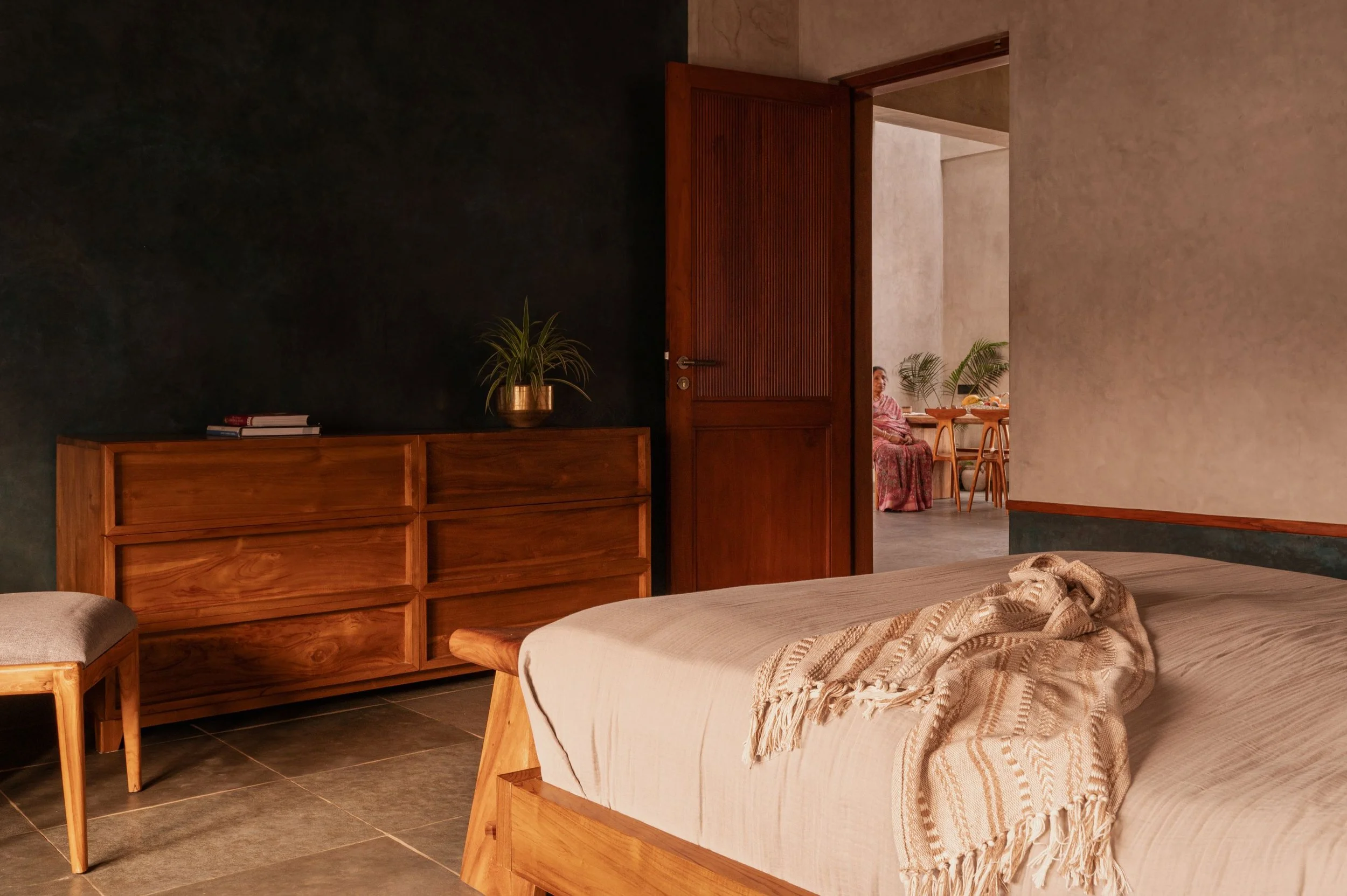
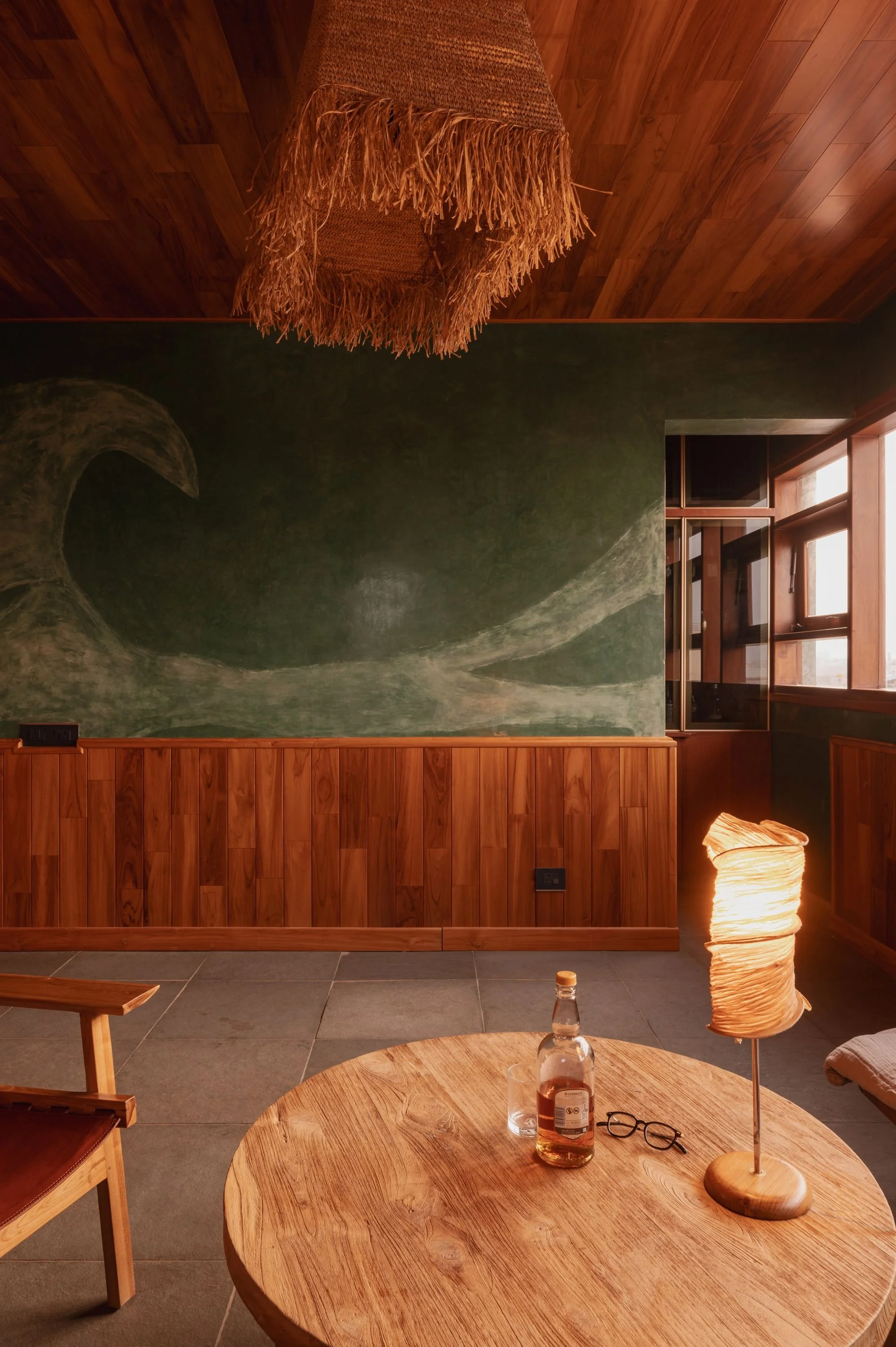
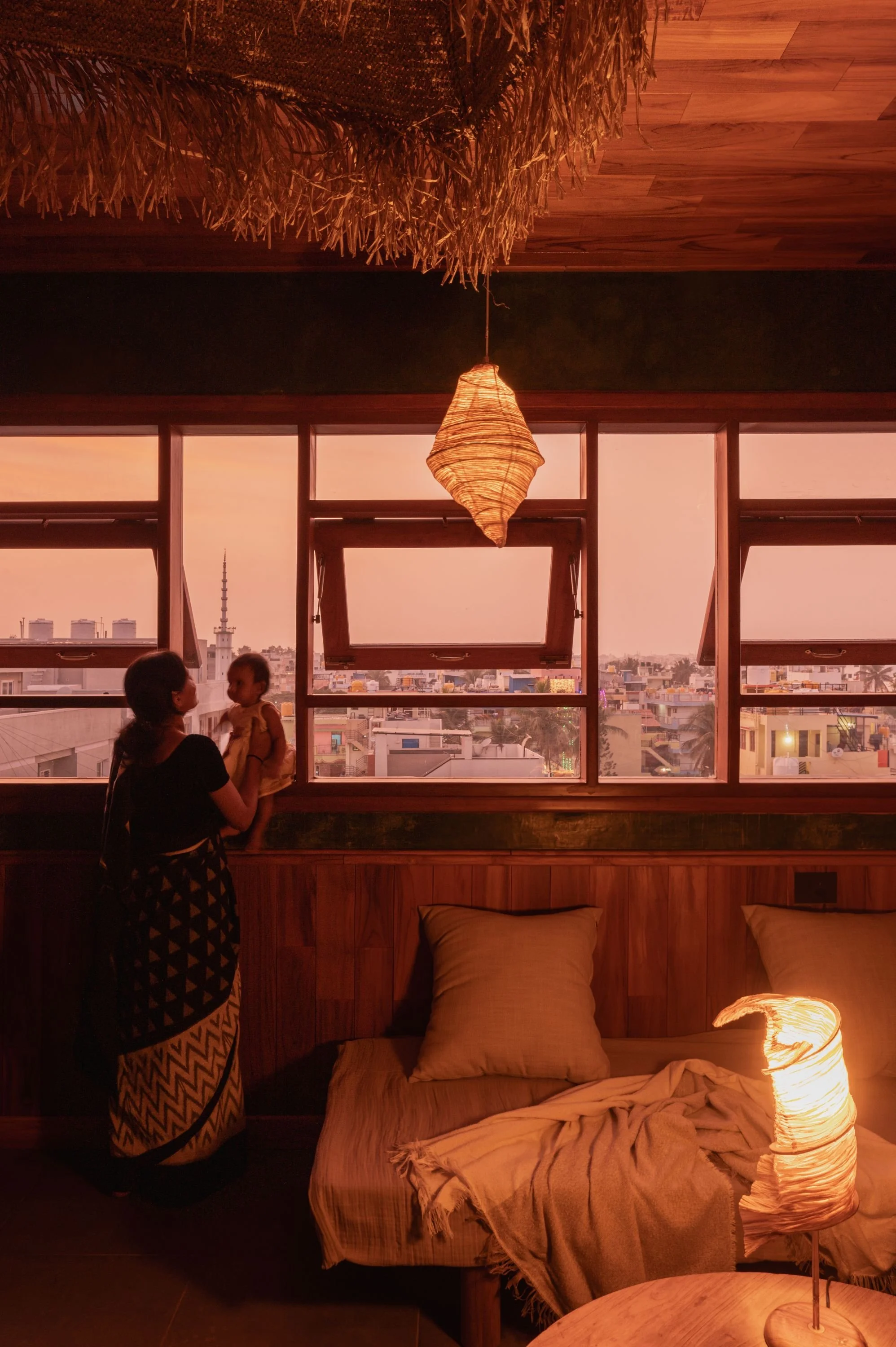
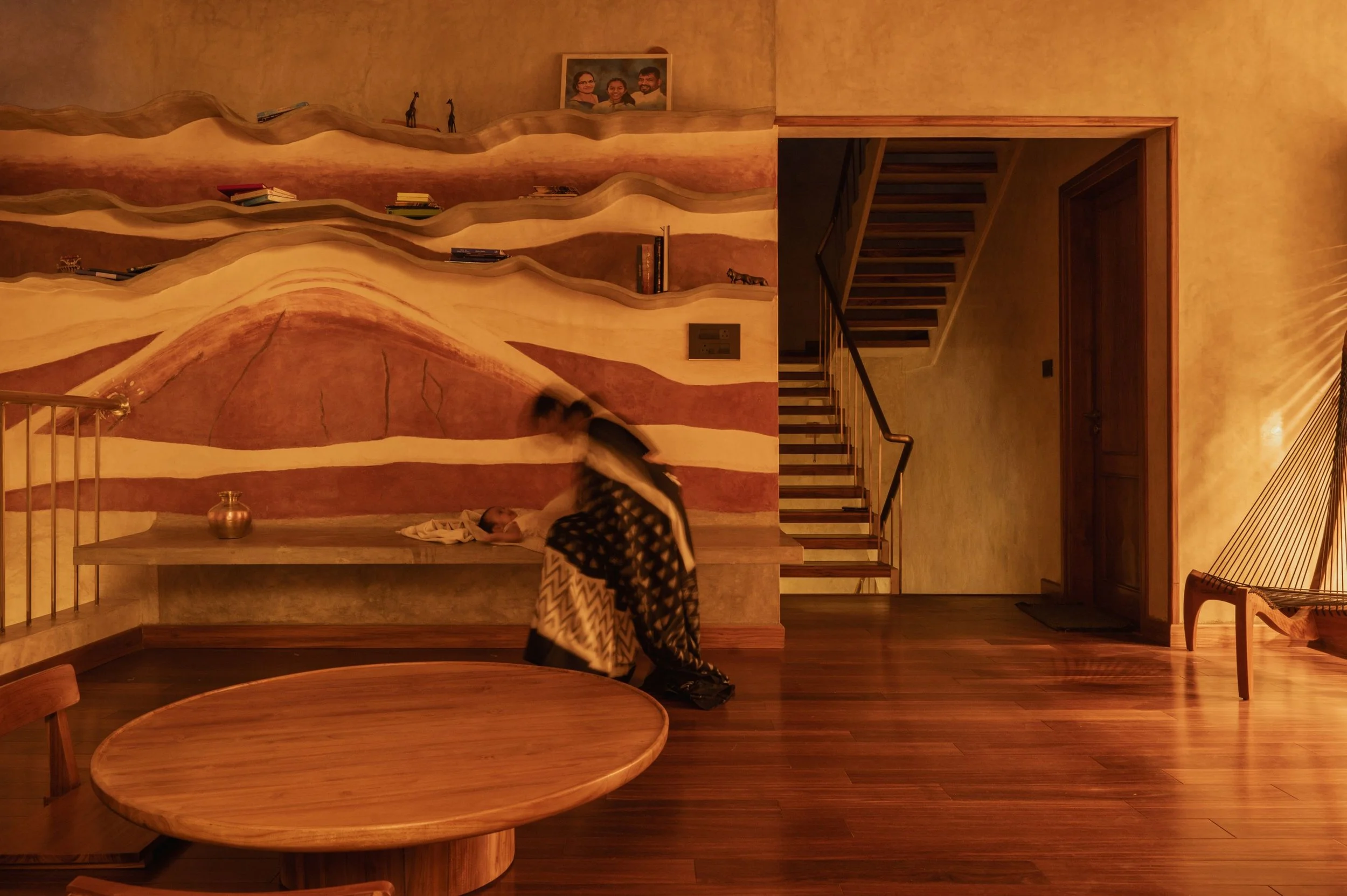
Hand-trowelled mud, lime, and oxide plasters form a soft, earthen envelope throughout the house, complemented by natural stone floors and timber-lined ceilings. Operable wooden shutters modulate light and privacy, while built-in seating edges, window ledges, and layered platforms replace loose furniture, encouraging a grounded and tactile relationship with the architecture.
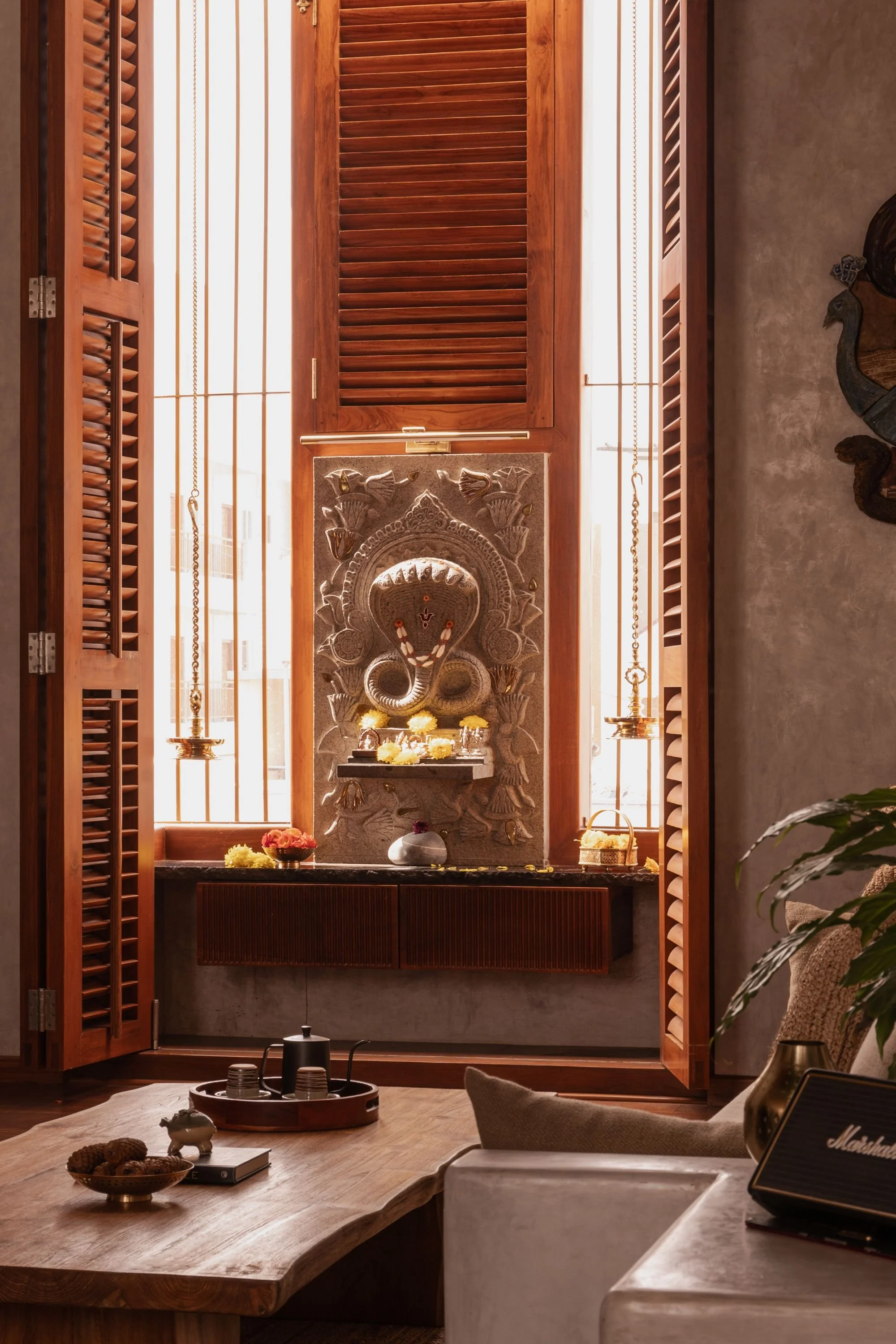
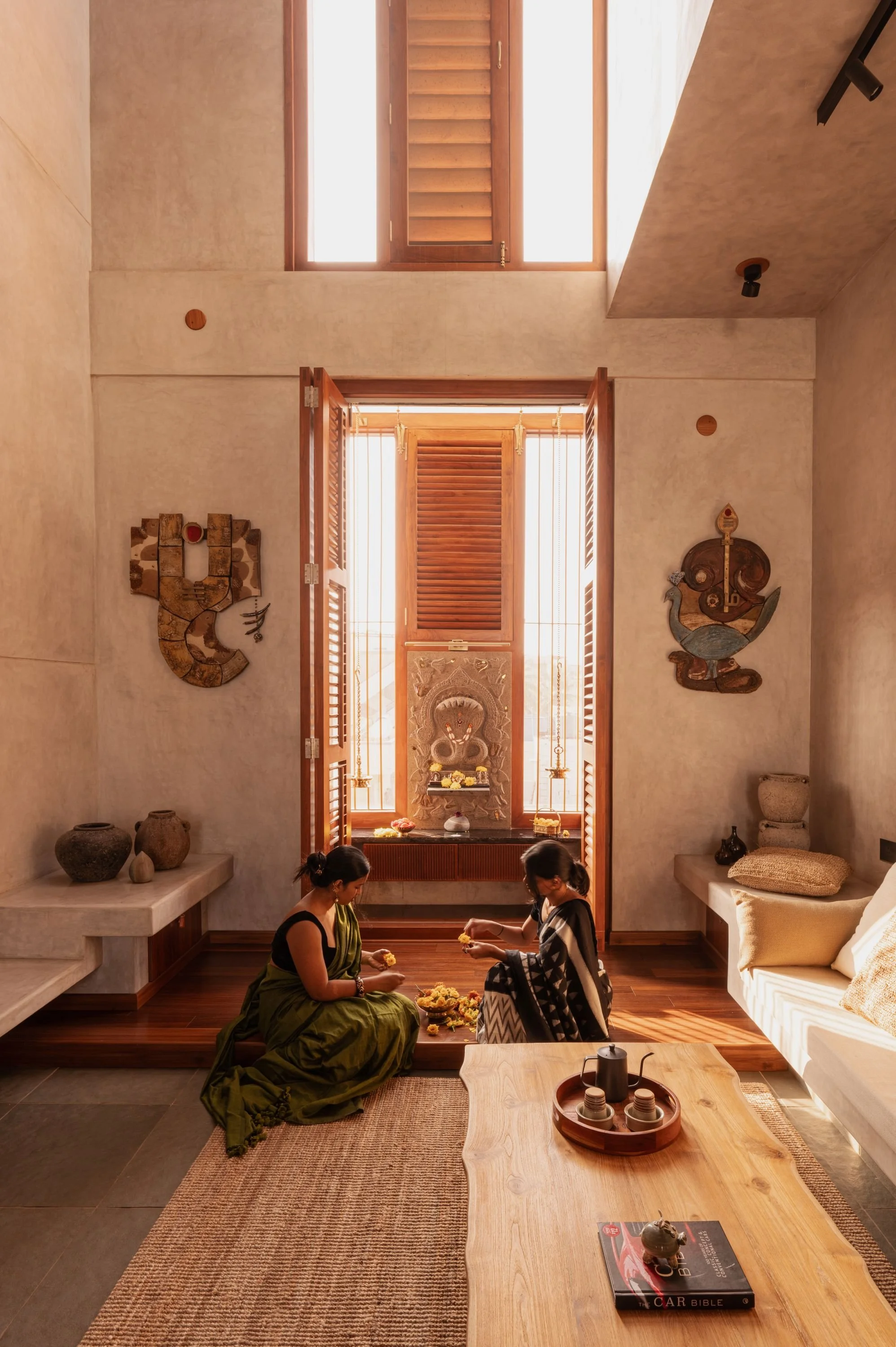
At the heart of the living space, the puja niche is intentionally integrated rather than set apart. Instead of isolating the sacred, subtle changes in level and operable wooden elements allow the space to shift between ritual and everyday living. When closed, the puja platform becomes part of the living room—an extension of seating and pause. When opened, it reveals a contemplative core, allowing worship to unfold without interrupting the continuity of shared life. In this way, spirituality is not segregated but gently woven into the daily rhythms of the home.
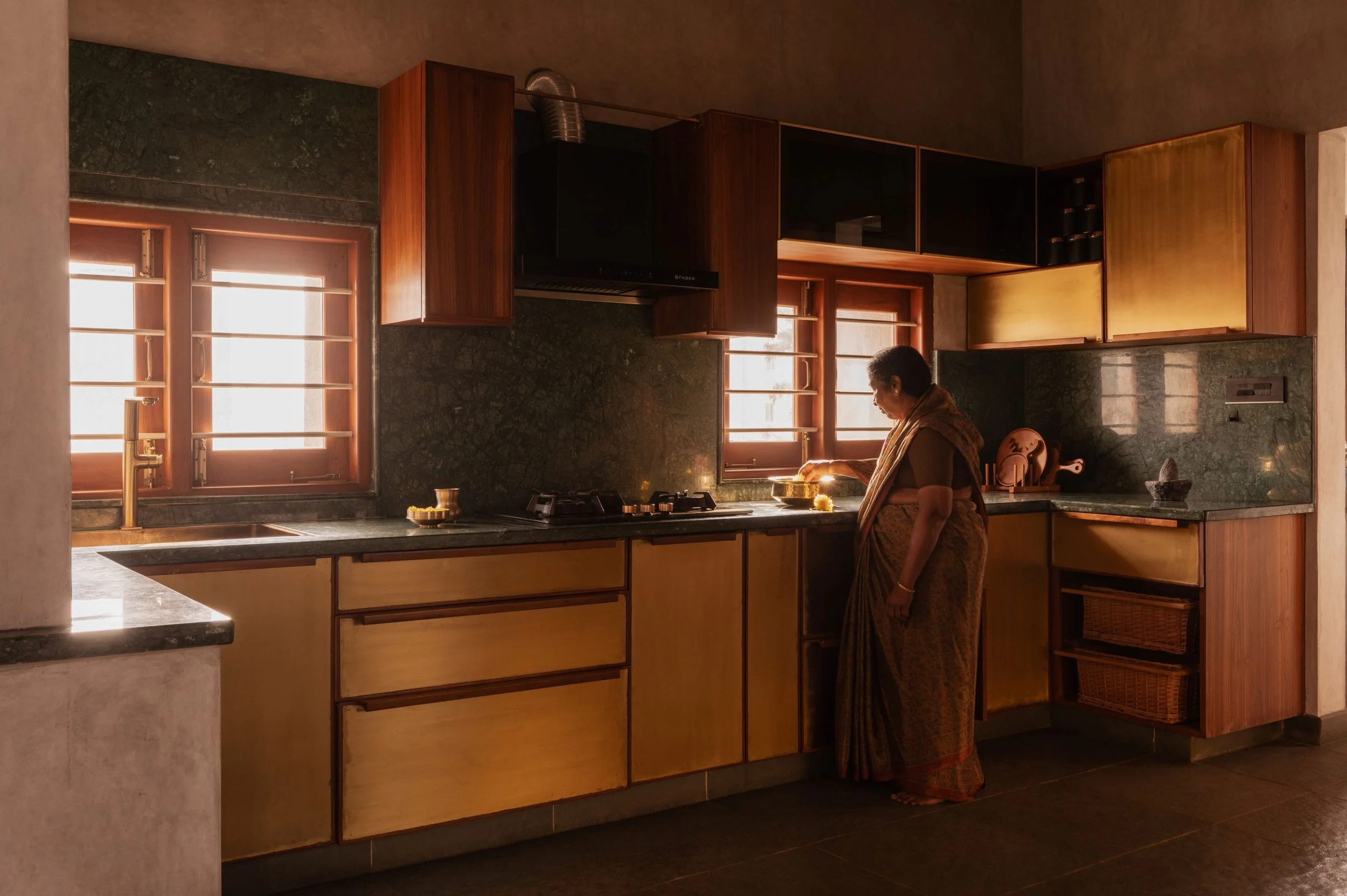
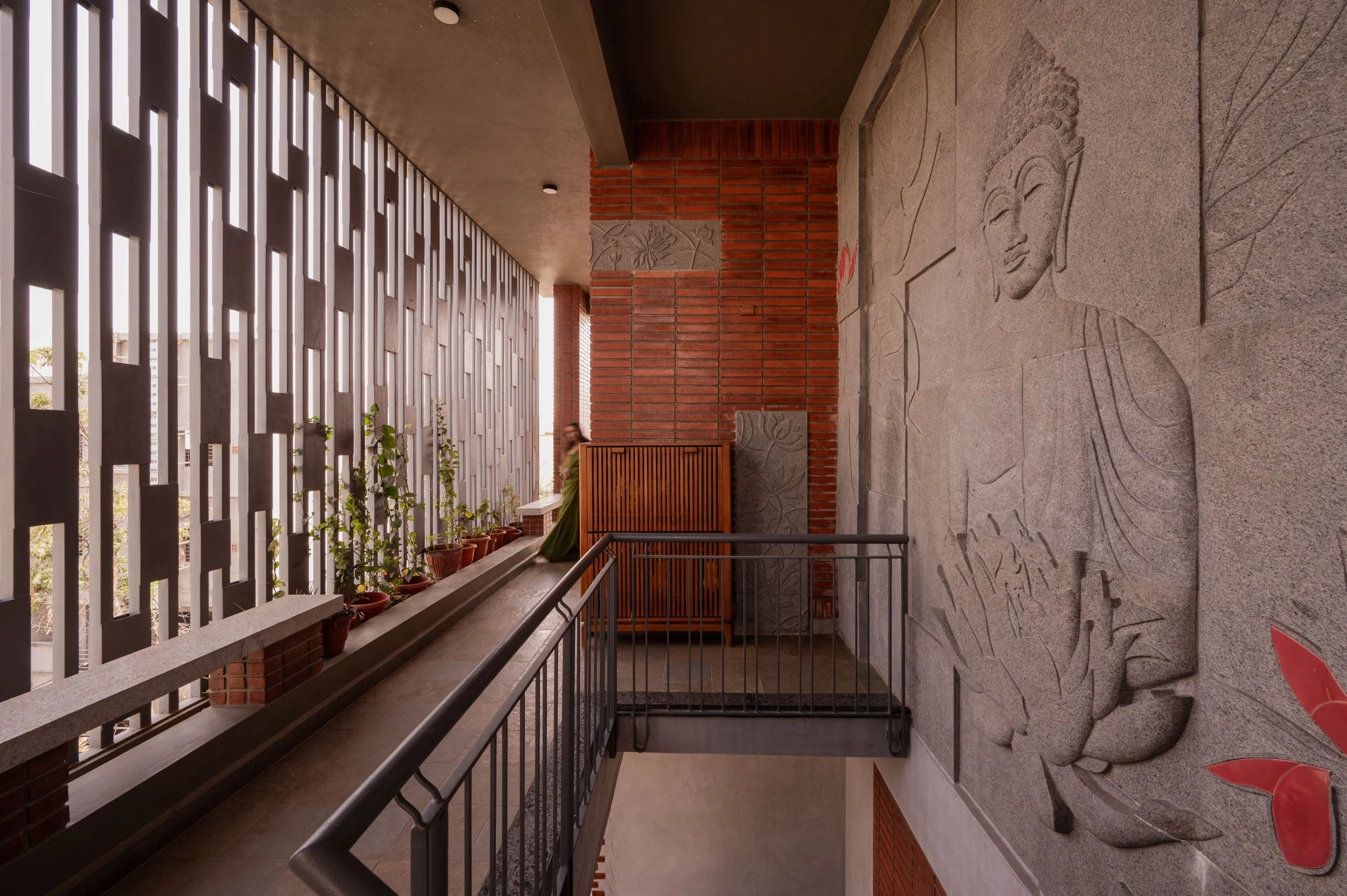
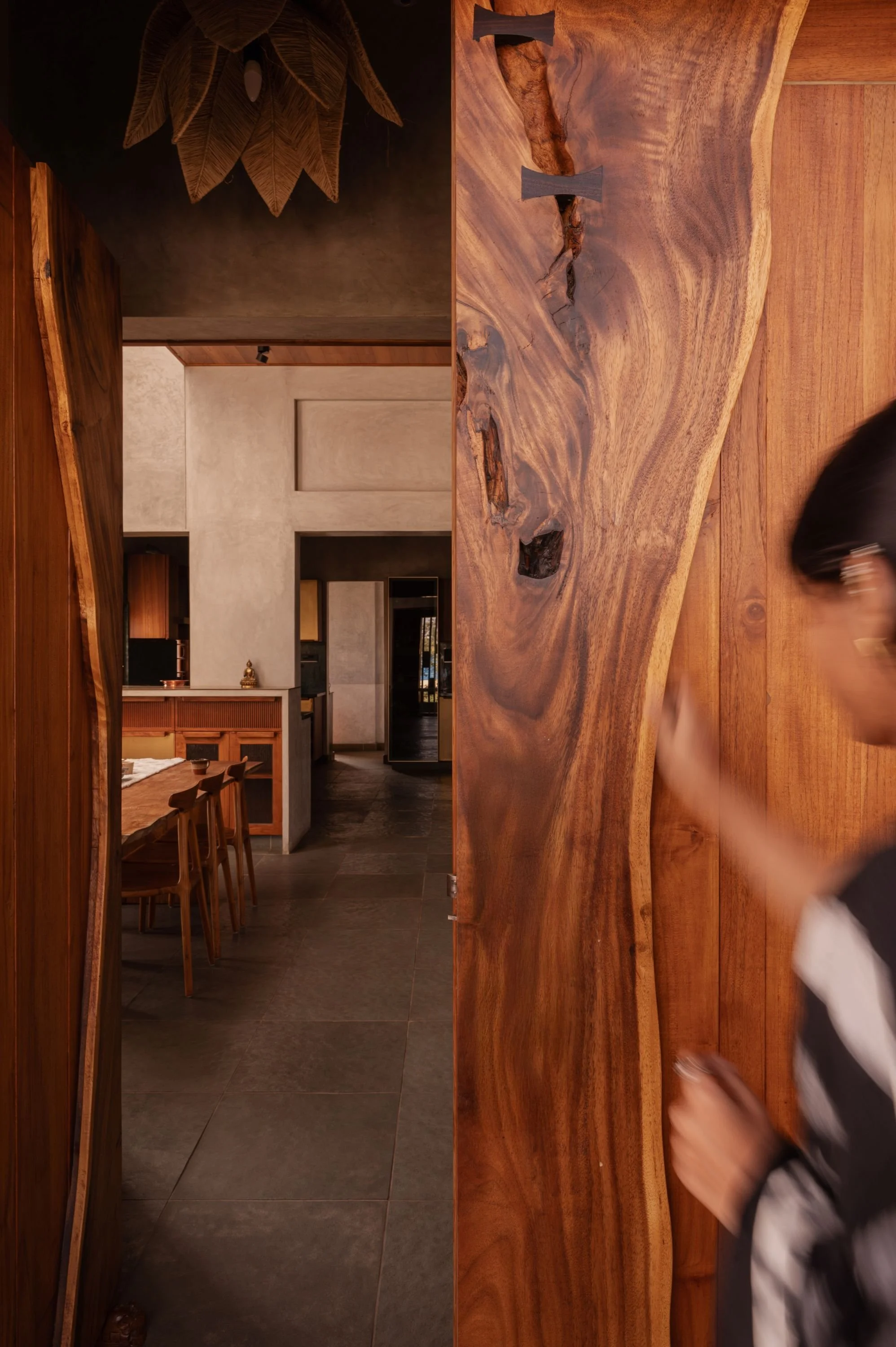
A live-edge timber door marks the transition from the city below to the home’s inward atmosphere. Inside, carved stone panels, subtle brass detailing, and bespoke artworks reference regional craft traditions without overt ornamentation. The kitchen introduces muted brass surfaces designed to develop patina over time, balancing function with warmth.
Across levels, framed openings, mezzanines, and vertical connections allow the home to unfold gradually—offering moments of gathering alongside spaces for retreat. In Krishnana Mane, minimalism is not pursued as an aesthetic ideal, but as a lived condition—one shaped by conscious choices, material restraint, and an understanding that richness lies not in excess, but in experience.